Pass Plus is worth it if you want six hours of structured post-test coaching in conditions your lessons never covered properly, and it is worth it financially only if your insurer offers a real discount and your premium is high enough for that discount to beat the course fee. Those are two separate questions, and most new drivers ask the second one while quietly hoping the answer to both is yes.
It sometimes is, not always. The insurance case for Pass Plus has been shrinking for years, and pretending otherwise does nobody any good.
This guide covers what the six hours actually buy you, the arithmetic that decides whether the insurance discount pays the course back, what official collision data says about where new drivers really come unstuck, when Pass Plus is genuinely the right purchase, and when you’d get more out of spending the same money on ordinary post-test lessons. Prices quoted are Select Drive’s real published rates, not a range scraped off a comparison site.
What you actually get for £280, and what you don’t
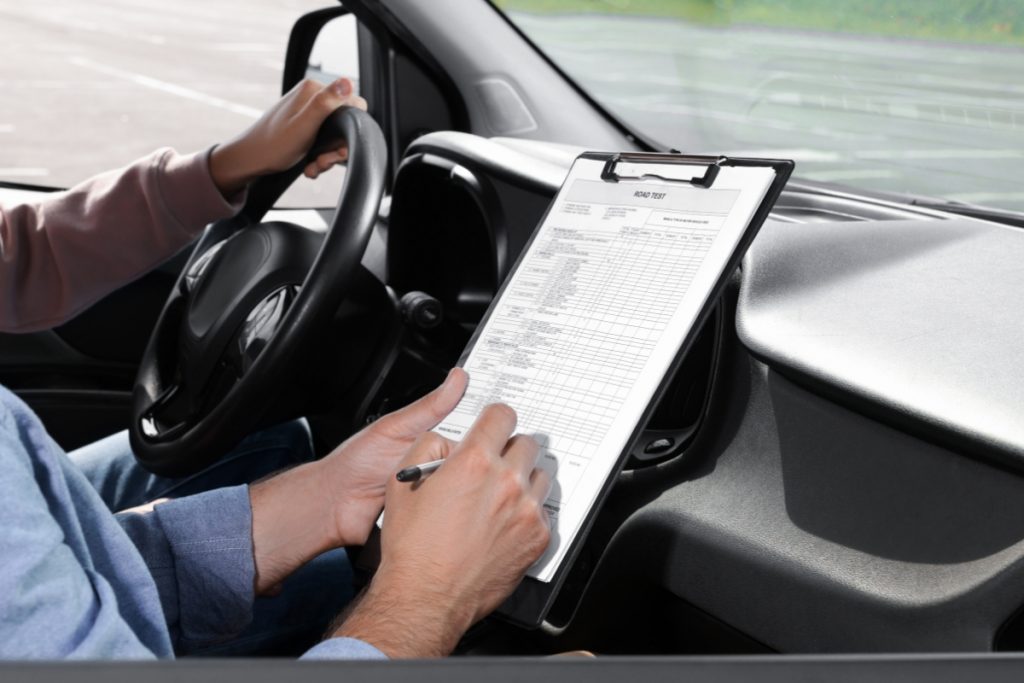
Pass Plus is a six-hour post-test course with six modules: town driving, all-weather driving, rural roads, night driving, dual carriageways and motorways. There is no test at the end. Your instructor assesses you continuously and, if you reach the required standard across all six, submits the paperwork for your certificate. The full structure and the official rules sit on the government’s Pass Plus page, and we’ve broken the modules down properly in our guide to what the Pass Plus scheme actually involves.
Select Drive charges £280 for the manual Pass Plus course and £300 for the automatic. Both are six hours, both are delivered in the premium fleet, and both include the DVSA certificate submission.
Here’s the bit no driving school puts on its website. Six standalone hours at our manual rate of £37 would cost you £222. Pass Plus costs £280. The £58 difference covers the DVSA registration and certificate administration, and the fact that the six hours are pre-planned around the six modules rather than built around whatever you fancy working on that week. On the automatic side the gap is £66, because six hours at £39 comes to £234 against a £300 course price.
That £58 is not a rip-off. But you should know it exists, because it changes the answer to “is Pass Plus worth it” if the only thing you actually want is more driving practice.
Does Pass Plus reduce your car insurance?
Some insurers reduce your premium for holding a Pass Plus certificate and many no longer do. The government is straightforward about this on its Pass Plus insurance discounts page, which states that discounts depend on the insurer and gives no list of participating companies and no set rates. There is no guaranteed saving, and any driving school that implies there is one is selling you something.
The discount, where it exists, is usually applied for one year only and calculated inside the quote rather than published as a headline percentage. Some brokers advertise up to 30%. Some large insurers have dropped Pass Plus recognition entirely. A few don’t even ask the question on the quote form any more.
So the honest way to answer this is arithmetic. Here’s what your annual premium would need to be for the discount to pay back a £280 manual Pass Plus course in the first year.
| Insurer discount | Annual premium needed to break even on £280 | Realistic for a new driver in Birmingham? |
|---|---|---|
| 5% | £5,600 | No |
| 10% | £2,800 | Only at 17, in a poor postcode, in the wrong car |
| 15% | £1,867 | Plausible in year one |
| 20% | £1,400 | Yes, if the discount is genuine |
| 30% | £933 | Yes, but 30% is a broker maximum, not a standard rate |
For context, Confused.com’s car insurance price index tracks average premiums across millions of quotes, and drivers aged 17 to 20 sit around the £1,800 mark. Run that against the table and the picture is clear enough: at a 10% discount you lose money, at 15% you fall just short, and from 20% you’re ahead.
Which means the financial case for Pass Plus rests entirely on a number you can look up in about ten minutes before you book anything. There’s a method for that further down.
Where new drivers actually crash, and why it changes the answer
The DVSA’s impact evaluation of the 2017 driving test changes followed up 2,289 people who had passed their test and asked them about their first six months on the road. Of those, 12.6% reported at least one collision, and 71.1% recalled at least one near miss. RoSPA’s own summary of the risk to newly qualified drivers puts the headline figure higher, at around one in five.
The more useful number in the DVSA study is where those collisions happened. Out of 327 self-reported incidents in the first six months, 103 were in town or city centres and 86 were in car parks, service areas or petrol stations. Seven were on motorways.
Read that again, then look at how Pass Plus divides its six hours. One module for town driving. One module for motorways. The two environments are treated as roughly equal in weight, when the data says one of them accounts for nearly a third of new-driver collisions and the other accounts for about 2%.
This is self-reported data and the DVSA was careful to caveat it, because the sample skewed female and nobody recorded how many miles each driver did on each road type. Motorways being safe per mile is well established, so a low collision count there isn’t a surprise. But the distribution still tells you something worth acting on, and it’s the opposite of how Pass Plus is usually sold. The dramatic module is the motorway one. The one that matches where new drivers actually have their prangs is town driving and low-speed manoeuvring in car parks and forecourts.
If you’re buying Pass Plus mainly for the motorway hour, you’re buying the module with the weakest link to the risk you’re actually carrying.
The motorway module is worth less than it was in 2017
Learner drivers in England, Scotland and Wales have been allowed on motorways since June 2018, provided they’re with an approved driving instructor in a car fitted with dual controls. Before that rule change, a full licence holder could legally join the M5 at Quinton having never seen a motorway in their life, and Pass Plus was the only structured way to fix that. It was a genuinely strong argument.
It isn’t any more. You can now do motorway work as a learner, before your test, with the instructor sitting next to a set of dual controls, which is a safer arrangement than doing it afterwards on your own insurance. Plenty of learners still don’t, because they’re focused on passing and motorway skills don’t appear on the test. But the option exists, and if you’ve already used it, one of the six Pass Plus modules is largely redundant for you.
If you passed without ever touching a motorway and that’s the specific gap you want closed, standalone motorway driving lessons will do it for less than the price of the full course. You’d get two or three focused hours on the M5 and M42 rather than one hour bolted onto five others.
When Pass Plus is worth it
Pass Plus makes sense in four situations, and they’re narrower than most write-ups admit.
Your insurer gives a confirmed discount of 15% or more and your premium is high enough for that to clear £280. This is the only scenario where the course pays for itself in cash, and you can verify it before you spend anything.
You passed with very little independent driving experience. Some people pass on the minimum hours, in daylight, in good weather, on familiar roads. Six structured hours across night, rain and unlit rural lanes closes a real gap, and the certificate is a secondary consideration.
You’re about to start a job that involves driving. Employers occasionally ask, and a few company car and grey fleet policies still recognise Pass Plus. If yours does, the maths changes completely.
You want the accountability of a fixed structure. Booking six loose hours means you’ll spend them on whatever feels comfortable. Booking Pass Plus means you’ll do the night module in January on an unlit lane whether you fancy it or not, because it’s in the syllabus.
When your money is better spent elsewhere
Being a driving school that sells Pass Plus, we should be clear about the cases where we’d tell you not to buy it.
Don’t buy Pass Plus for the insurance discount before you’ve checked that your insurer offers one. Every year we get people who bought the course on the assumption and then found their provider doesn’t recognise it. There’s no refund for that, and no way to claim the discount retrospectively from an insurer who doesn’t offer it.
Don’t buy Pass Plus if there’s one specific thing frightening you. If it’s roundabouts on the Wolverhampton Road, or parallel parking, or the merge at M5 junction 3, then six hours split across six modules gives you roughly one hour on your actual problem. Three hours of refresher driving lessons aimed entirely at that one thing will fix it faster and cost you less.
Don’t buy Pass Plus if you already covered motorways and night driving as a learner and your premium is under about £1,400. At that point the discount can’t pay the course back and you’ve already had the training. Put the £280 towards your excess.
And don’t buy Pass Plus purely because a comparison site told you it’s a good idea for young drivers. Those pages are written to sell insurance, not tuition, and none of them know what your premium is.
Pass Plus versus six hours of ordinary post-test lessons
The comparison nobody in the search results makes properly, because most of them aren’t driving schools.
| Pass Plus (6 hours) | 6 hours of post-test lessons | |
|---|---|---|
| Cost (manual) | £280 | £222 |
| Cost (automatic) | £300 | £234 |
| Content | Fixed: six set modules | Whatever you need most |
| Certificate | DVSA Pass Plus certificate | None |
| Insurance discount | Possible, insurer dependent | None |
| Best for | Broad gaps, or a confirmed discount | One or two specific weaknesses |
| Structure | Pre-planned, can’t be skipped | You decide, session by session |
Both are six hours in the same car with the same instructor. The difference is whether you’re paying £58 for a syllabus and a certificate, or saving £58 and directing the time yourself. Neither answer is wrong. It depends entirely on whether your weaknesses are broad or narrow, and whether your insurer is going to hand any of that money back.
How to test the numbers before you book
Ten minutes of work will tell you whether Pass Plus pays for itself, and it beats every generic estimate on the internet including the one in the table above.
- Get a full quote for your car, your postcode and your circumstances, answering no to any question about additional qualifications.
- Run the identical quote again, changing only the Pass Plus answer to yes.
- Note the difference in pounds, not in percentage terms.
- Repeat with two or three other insurers, because the variation between providers is far wider than the variation between drivers.
- Compare the best cash saving you found against £280 for manual or £300 for automatic.
If the biggest saving you can find is £80, the insurance argument is dead and you should decide on the training merits alone. If it’s £300, book the course. Most insurers let you declare Pass Plus at renewal too, so if you’re mid-policy, run the test against your renewal quote rather than your current premium.
One caution. A handful of quote forms ask about “advanced driving qualifications” in a way that lumps Pass Plus in with IAM RoadSmart and RoSPA advanced tests. Those are different things, and declaring the wrong one is a problem you don’t need. If the form doesn’t name Pass Plus specifically, ring them.
What the six modules look like around Quinton, Oldbury and Halesowen
The modules are national. The roads are not, and the value of the course depends heavily on whether your instructor uses roads you’ll actually be driving on next week.
Town driving around here means Bearwood High Street at school run time, the Hagley Road, and the tighter residential grids off Quinton Lane where parked cars leave you a single working lane. That’s the module doing the heaviest lifting, and it’s the one that lines up with the DVSA collision data. Our driving lessons in Quinton run through the same streets, so most of our Pass Plus learners already know the geography and can concentrate on the traffic.
Dual carriageways means the A456 Quinton Expressway and the A4123 Wolverhampton Road, which is where a lot of new drivers first discover that a slip road is a negotiation and not a queue. Motorways means the M5 at junction 3 and junction 4, and if there’s time, the M42. Rural roads means heading out past Romsley and the Clent Hills, where the lanes are unlit, poorly cambered and full of blind crests.
Night driving in Halesowen in December on those same lanes is a genuinely different job from night driving on the Hagley Road, and we do the module out there deliberately. All-weather driving depends on what the sky gives us on the day, though anyone learning through a Birmingham winter gets plenty of it, and our winter driving guide for Birmingham covers the parts you can rehearse in your head before you’re in it. Learners on our driving lessons in Halesowen tend to get the rural and night modules combined, because the roads are right there.
If you decide the course is right for you, our Pass Plus driving courses run at £280 manual and £300 automatic, six hours, certificate included, usually split across two or three sessions.
Pass Plus: frequently asked questions
Is Pass Plus done in one day?
It can be, but it usually shouldn’t be. The minimum is six hours and some schools run it as a single day. Splitting it across two or three sessions works better, because the night module needs darkness and the all-weather module needs weather, and you can’t order either to arrive between nine and five on a Tuesday. We normally spread Pass Plus over two or three sessions to get honest conditions for each module.
Can you fail Pass Plus?
There’s no test, so there’s nothing to fail in the usual sense. Your instructor assesses you continuously across all six modules and only submits the certificate paperwork when you’ve reached the required standard in each one. If you haven’t, you do more hours until you have. Nobody gets a certificate they haven’t earned, and nobody gets a fail on their record.
What are the benefits of Pass Plus?
Structured experience in six conditions your test never assessed, a DVSA certificate, and a possible insurance discount depending entirely on your provider. The training benefit is real and the certificate is real. The discount is the one that varies, and it’s the one most people buy the course for, which is the wrong way round.
How long is a Pass Plus certificate valid for?
The certificate doesn’t expire. Insurers who recognise Pass Plus generally want it completed within 12 months of passing your test, and the discount is typically applied for one policy year rather than permanently. If you passed three years ago, the certificate is still valid but the insurance angle has usually gone.
Can you do Pass Plus in an automatic?
Yes. The six modules are identical and the certificate is the same. Select Drive runs automatic Pass Plus at £300 in the Mercedes-Benz A-Class, and it’s a popular option with people who learned automatic and have never taken a car above 50mph.
What happens to my insurance when I pass my test?
It goes up, usually sharply, because you move from a learner policy to a full licence policy with no no-claims history. That first-year premium is why the Pass Plus question comes up at all. The single biggest lever on that number is not Pass Plus, it’s the car you choose and whether you accept a telematics policy. Pass Plus, where recognised, is a smaller adjustment on top.
Is there a cheaper subsidised version of Pass Plus?
In Wales, Pass Plus Cymru is subsidised and costs a fraction of the standard price. There’s no national equivalent in England, though some individual councils have run subsidised young driver schemes over the years. It’s worth a quick check with your local authority before you book, because a subsidy changes the break-even maths entirely.
The honest verdict
Is Pass Plus worth it? Worth it as training, yes, if your gaps are broad rather than specific and you’d otherwise never book those hours. Worth it as a financial decision, only when a confirmed insurer discount clears the course fee, which for a £280 manual course means roughly 15% off a premium of £1,870 or better.
The thing to take away is that these are two separate purchases wearing one name, and the search results treat them as one. Decide which one you’re actually buying. If it’s the training, the DVSA’s own collision data suggests the town driving and low-speed modules matter more than the motorway hour that gets all the attention. If it’s the discount, spend ten minutes running two identical quotes before you spend £280 on a guess.
Either way, get the answer from your insurer rather than from a comparison page, then come and talk to us about the six hours. We’ll tell you honestly if we think refresher lessons would serve you better.
Sources and further reading
- Pass Plus, GOV.UK — official course structure, module list and eligibility.
- Pass Plus: car insurance discounts, GOV.UK — the government’s position on insurer participation.
- Driving test changes 2017: impact evaluation research findings, DVSA — first-six-month collision and near-miss data for 2,289 new drivers.
- Newly qualified drivers at risk, RoSPA — post-test risk profile and contributing factors.
- Car insurance price index, Confused.com — average premium data by age band.