
Intensive driving courses are worth it for learners who need to pass quickly and can handle several hours of focused driving each day, but they are not the right choice for everyone. The answer depends on your starting point, your learning style, and how honest your driving school is about what the course involves.
Most of the advice online about intensive courses comes from insurance comparison sites and national directories. Very little of it includes real pricing from a named driving school or explains what a typical intensive week actually looks like from the instructor’s side. This guide covers both.
If you are considering an intensive driving course in Birmingham, the sections below break down what to expect, what it costs, and how to decide whether intensive or weekly lessons are the better fit for you.
What an intensive course actually involves
An intensive driving course covers the same content as weekly lessons. The difference is time. Instead of spreading 40 to 50 hours of tuition across several months, an intensive course compresses them into one or two weeks of daily lessons.
A typical intensive week at Select Drive runs around three hours of driving per day over a longer period, rather than cramming six hours into a single day. That structure works better for most learners because concentration drops significantly after three hours behind the wheel, and tired driving builds bad habits. Some learners prefer longer days to finish sooner, but the default recommendation is shorter sessions spread across more days.
An intensive course does not reduce those hours. It simply delivers them faster. Learners who have some prior experience, even a handful of lessons taken months or years ago, often need fewer hours and can complete a shorter course.
Who intensive courses suit and who should probably avoid them
Intensive courses work best for learners who already have some experience. If you can handle left and right turns, you have touched on roundabouts, and you understand the basics of car control, an intensive block can take you from competent to test-ready efficiently. Returning drivers who had lessons months or years ago are strong candidates, as are learners with a genuine deadline like a job start date or university move.
Ideally, the learner has already passed their theory test and has a practical test booked. Given that DVSA waiting times are running at around 22 weeks, having a test date secured before starting the course means the intensive block can be timed to finish just before the test. Without a booked test, there is a risk of skills fading during the wait.
They are less suitable for complete beginners who have never sat behind the wheel. The pace is demanding, and there is a lot to take in all at once. Learners who experience high anxiety around driving may also find long daily sessions overwhelming rather than helpful. There is nothing wrong with needing more time between lessons to process what you have learned.
Select Drive teaches both intensive and weekly formats, so there is no incentive to push one over the other. The honest recommendation is that most complete beginners benefit from a few weeks of regular lessons before committing to an intensive block. A short assessment lesson can help determine the right starting point.
“Intensive courses are probably best for students who have had a bit of experience first. It can be quite full on, so it’s always ideal if the student knows the basics and what to expect. I normally find three-hour lessons daily over a longer period works better than doing six hours daily in a shorter period.”
Gurpreet Bhogal, Select Drive instructor
What intensive courses cost in Birmingham
Driving lesson prices in Birmingham vary, but Select Drive charges £37 per hour for manual lessons and £39 per hour for automatic lessons in the Mercedes-Benz A-Class AMG.
There is no fixed “intensive course package price” at Select Drive because the hours depend entirely on the learner. A returning driver who has driven before might need 20 to 25 hours. A near-complete beginner might need 35 to 45. Quoting a flat rate before assessing the learner would mean either overcharging experienced drivers or underserving beginners.
Schools that advertise a set price intensive package (often £999 or £1,200) are guessing at your hours before they have met you. Some learners finish early and overpay. Others run out of hours and need to book more at extra cost. It is worth asking any school what happens if you need more hours than the package includes.
The practical driving test itself costs £62 on a weekday or £75 on weekends and bank holidays. Theory test costs £23. These are separate from lesson costs.
The test booking gap that most guides skip
One thing that almost no online guide mentions is the gap between finishing your lessons and actually sitting your test. DVSA driving test waiting times in England have been running at around 22 weeks in many areas. Even with cancellation checking services, there is often a delay of several weeks.
This matters for intensive course planning. Finishing a one-week course does not mean testing on Friday. In most cases, the learner completes their intensive block, then waits for a test slot to become available. During that gap, skills can fade without practice.
The practical approach is to book a test date first (or use a cancellation checking service to secure an early slot), then schedule the intensive course to finish a few days before. Select Drive can advise on realistic timelines for test centres like Kings Heath and Dudley, where local wait times and cancellation patterns are familiar territory.
How Select Drive runs intensive courses
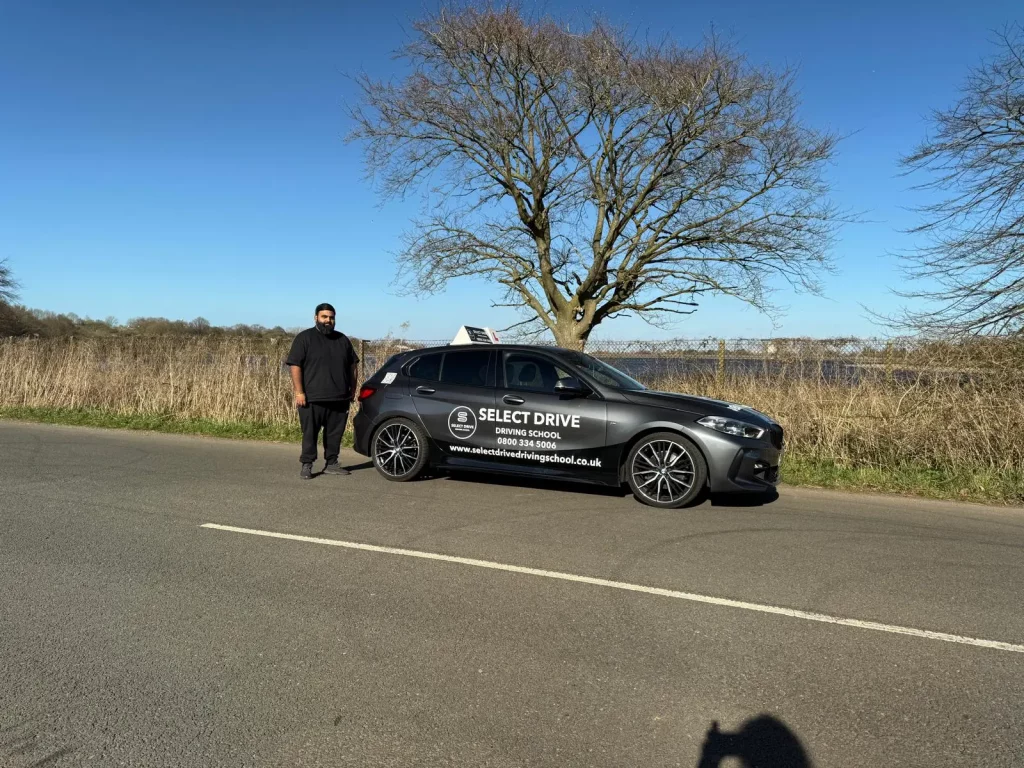
Select Drive’s intensive courses are taught by DVSA-registered instructors in a BMW 1 Series M Sport for manual lessons or a Mercedes-Benz A-Class AMG for automatic. The vehicles are a genuine differentiator. No other driving school in Birmingham offers premium tuition vehicles, and for learners spending three hours a day in focused driving, comfort and build quality make a real difference.
Lessons cover the areas around Quinton, Oldbury, and Halesowen, with test preparation focused on the routes used at local test centres including Dudley and Kings Heath. The instructor knows these routes well, which means the final days of the course can focus on the specific junctions, roundabouts, and road features that come up on test day.
Frequently asked questions
What is the pass rate for intensive driving courses?
The DVSA does not publish separate pass rate data for intensive courses. The national average practical test pass rate sits at around 49%, but that figure covers all learners regardless of how they trained. Any school claiming a specific intensive course pass rate is using internal data, not an official DVSA figure. The best indicator of readiness is whether the instructor considers you test-standard, not the format of your lessons.
How many hours of driving is it during an intensive course?
It varies by school and by learner. At Select Drive, the default is around three hours of daily driving spread over a longer period, because concentration and retention are better in shorter sessions. Some schools run five to six hour days, and some learners prefer that to finish faster.
Are intensive driving courses good for beginners?
They can be, but not always. A complete beginner with no prior driving experience may find the pace demanding. A few initial weekly lessons to build basic car control (clutch, steering, road awareness) before switching to an intensive block is often a more effective approach. Learners with some prior experience tend to get the most from intensive formats.
Is an intensive driving course a guaranteed pass?
No. No driving course can guarantee a pass. The practical test is assessed independently by a DVSA examiner, and the outcome depends on the learner’s performance on the day. Be cautious of any provider advertising a guaranteed pass. What a good intensive course does is get you to test standard efficiently, so you are as prepared as possible when test day arrives.